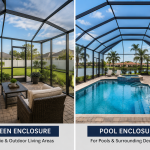
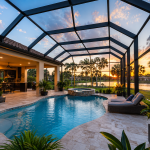
Maybe you have already talked to a few contractors. They all seemed confident, and their proposals looked professional. Still, the prices might be thousands of dollars apart, and you might not have a clear answer yet.
The best pool enclosure companies make it easy for you to see what sets them apart.
Before you compare final proposals, begin by reviewing questions to ask a pool cage contractor. This guide helps you get ready for each meeting. After that, look at what each company learned about your property, what they recommend, and what is included in each price.
Why Pool Enclosure Proposals Rarely Compare Cleanly
It is hard to compare pool enclosure proposals because contractors often include different types of work, permit responsibilities, and material quality in their estimates, even if the finished enclosures look the same.
A full bid might include engineering, permit fees, removing your old pool cage, upgraded screen mesh, new doors, site cleanup, and help with the final inspection. A cheaper bid might only cover basic aluminum framing and standard mesh. That lower price can seem like a great deal at first, but it is often lower because important items were left out to make the quote look smaller.
This difference in what is included happens all the time in Florida. Before you decide which deal is best, make a checklist that covers everything in each proposal. When the scope matches, you can compare prices with confidence and avoid surprise costs during the project.
Separate Company Quality From Project Scope
You should look at the company and the proposed structure as two separate choices.
A well-run business can still recommend a package that does not fit your goals. A smaller, locally owned builder may offer a better plan than a larger firm with more trucks and ads. One score cannot measure both issues.
First, look at how the company communicates, its local history, organization, follow-up, and how clearly the team explains project limitations. You should also confirm that the company carries active liability and workers’ compensation insurance before comparing proposals, since proper coverage helps protect you if an accident occurs during construction. Once you are confident in the company itself, review the proposal: the layout, frame, mesh, doors, site preparation, engineering, and warranty.
By keeping these two decisions separate, you avoid picking a company you like without making sure their proposal meets your long-term needs.
How to Compare Pool Enclosure Companies on the Same Scope
The best way to compare is to turn each estimate into a single checklist.
Do not start by looking at the total price. Instead, list every part of the project: engineering, permits, demolition, hauling, concrete work, framing, roof style, mesh, doors, hardware, gutters, cleanup, inspections, and warranty documents. Note whether each company includes, excludes, or leaves each item unclear.
Permit responsibility should have its own line. In Florida, an installation might need drawings, reviews, inspections, corrections, and official closure. Make sure you know who handles each step.
Engineering deserves the same attention as permit responsibilities. One proposal may include site-specific engineering drawings prepared for your property, while another simply lists engineering as an allowance. Your enclosure should be engineered for its actual dimensions, attachment points, and applicable Florida Building Code wind-load requirements instead of relying on a generic design. For more details, check the pool enclosure permit requirements in Florida.
Next, watch for allowances and unclear terms. An allowance is just a placeholder, not a final price. Words like standard materials or repairs as needed can lead to confusion later.
When every estimate includes the same work, you can compare value instead of guessing.
Compare the Recommended Solution, Not Just the Price
Different recommendations show how carefully each company studied your property.
One contractor may suggest full replacement. Another may recommend targeted repair and new mesh. A third may change the roof line or door locations. The right answer depends on the structure’s condition and how you use the outdoor space.
Ask what problem each plan solves. Does it address corrosion, loose framing, drainage, torn mesh, or blocked sightlines? Does an upgrade improve daily use, or only increase the price?
Material details also matter. Structural aluminum carries the load, but fasteners, anchors, spline, doors, and mesh affect service life. Coastal properties need close attention to corrosion-resistant hardware. Orlando and Brandon properties still face humidity, UV exposure, heavy rain, and strong storms.
Compare design options through pool enclosure design and installation. A wider span may improve the view. Finer mesh may block no-see-ums and mosquitoes while reducing airflow. A larger roof section may add shade but change wind and water movement.
The strongest plan solves your main problem without adding upgrades you do not value.
Evaluate How Well Each Company Understood Your Property
A good proposal should look like it belongs to your property, not any property.
The details should reflect the deck, pool area, doors, roof tie-ins, gutters, landscaping, access, and nearby walls. They should also match how you use the space.
The evaluation should also include the condition of the existing concrete deck. Before a new enclosure is installed, qualified contractors look at the slab’s condition, attachment areas, and whether the concrete can properly support the proposed structure. Catching those issues early helps prevent unexpected change orders once demolition begins.
A field professional should connect each condition to the proposed design. You should not have to guess why a roof shape, screen type, or framing change was recommended.
Better property knowledge now lowers the chance that you will pay later to correct a poor choice.
Compare Communication Before You Sign
Pre-contract communication gives you a useful preview of how the job may be managed.
After the visit, notice whether promised documents arrive. Check whether estimate revisions match your requests. Listen for conflicting answers from sales, office, and field staff. You should not have to chase every update.
Fast replies alone do not prove quality. Clear and consistent replies matter more. You want a company that documents decisions, fixes errors, and admits when engineering or site conditions affect the project.
Ask to see recent projects that resemble your own. Local references and completed installations give you a better picture of how the company handles work similar to yours than polished marketing photos alone.
Customer reviews are also more valuable when you look for patterns instead of star ratings. Repeated comments about communication, cleanup, warranty service, or project organization usually tell you more than one unusually positive or negative review.
You should also notice pressure. A fair deadline tied to scheduling can be reasonable. Repeated demands to sign before you understand the scope are not.
Good communication cannot guarantee perfect workmanship, but poor communication rarely gets easier after construction starts. Your job will involve approvals, deliveries, inspections, and payments. You need a process you can follow.
Decide Which Differences Matter Most to You
The best company for your neighbor may not be the best company for you.
For storm damage, you may care most about structural review, demolition, documentation, and insurance considerations for pool enclosures. For a new pool screen enclosure, you may care more about layout, door placement, visibility, shade, and future maintenance.
A rescreening job comes with its own risks. You might pay more attention to the mesh, damaged fasteners, spline condition, cleanup, and how the crew will protect your deck and pool water.
Your plans for the house matter too. If you expect to live there for many years, stronger materials and a design you enjoy may carry more weight. If you may sell soon, permit closure and broad buyer appeal may matter more.
Write down your top three priorities before you start comparing proposals. This helps make sure a fancy presentation does not distract you from what really matters to you.
Use a Weighted Score Instead of a Gut Feeling
A weighted score helps you make a decision without acting like every factor is equally important.
Evaluation area | Suggested weight |
Suitability of the proposed solution | 25% |
Completeness of the written scope | 20% |
Relevant Florida experience | 15% |
Communication and transparency | 15% |
Materials and design value | 10% |
Warranty and service support | 10% |
Comparable price | 5% |
Give each company a score from one to five, multiply by the weight you give each factor, and add up the results.
The numbers are not meant to make the decision for you. They just show where your judgment is leaning. One company might have the lowest price but a weak scope. Another might have the best technical plan but poor follow-up. A third could offer the best balance.
The goal is not perfect math. It is to make a decision you can explain before you pay a deposit.
When the Lowest Estimate Can Be the Right Choice
A lower price can be right when scope and quality are truly comparable.
The proposal should still define materials, labor, permits, cleanup, inspection support, payment terms, and warranty coverage. You should also confirm that the price does not depend on you managing major parts of the job.
Among qualified pool enclosure companies, the lowest complete bid may be a smart decision. You do not need to pay more to feel safe. You need proof that you are buying the same result.
When a Higher Estimate May Provide Better Value
A higher estimate may save money when it removes real risk.
You may be paying for concrete repairs, stronger attachment details, better corrosion-resistant hardware, a more suitable roof layout, or complete permit management. You may also be paying for fewer tasks left on your shoulders.
Study the warranty. A long-term warranty has little value when the claim process is vague. Separate structural coverage from workmanship coverage. Structural warranties generally apply to the enclosure itself, while workmanship warranties cover how the enclosure was installed. A proposal with clear coverage for both often provides more long-term value than one with a longer but less defined warranty.
Do not pay extra for labels such as premium. Pay for improvements you can see, understand, and value.
Close the Gaps Before You Choose
Do not sign anything until all major responsibilities are clear.
Confirm what will be built, removed, or repaired. Identify what remains your responsibility and what can change the price. Check payments, change orders, permits, inspections, cleanup, and warranty service.
Ask how hidden damage will be handled. During replacement, corrosion or weak concrete may appear after demolition. The contract should explain how the issue will be documented and approved before extra work starts.
If the proposal is almost right, request a revision. A clean contract is easier to manage than a chain of texts and verbal promises.
You should also compare the payment schedule with the work that will be completed at each stage. A large early payment can leave you exposed if progress slows. Milestone payments should match clear events, such as material delivery, frame completion, screening, or final inspection. You are not trying to distrust the builder. You are making sure money, progress, and responsibility move together from start to finish.
The strongest of the pool enclosure companies will not ask you to fill major gaps with trust alone. Clear paperwork protects both sides.
Choose the Company That Leaves the Least Unresolved Risk
Your best choice is usually the company whose proposal leaves the fewest important questions unanswered.
You should understand the structure, materials, responsibilities, schedule, cost, warranty, and support plan. You should also know why the recommendation fits your property and how any changes will be handled.
Price matters. So do customer satisfaction, local knowledge, and proven installation skill. No single factor should control the full decision.
After comparing qualified pool enclosure companies, choose the one that gives you the clearest path from design to final inspection. That clarity helps protect your investment, reduce stress, and support the value of your home.
Get a Clear Pool Enclosure Proposal From Creative Pool Cages
Creative Pool Cages helps you turn confusing choices into a practical plan for your property.
You get guidance on layout, materials, mesh, structural needs, permits, and a realistic scope. Each recommendation is based on how you use the space, what your property needs, and your budget.
As a leading Florida builder, Creative Pool Cages brings real experience to new enclosures, replacements, custom designs, and screen upgrades throughout Central and Southwest Florida. You get a team that understands humidity, sun, rain, wind, insects, and the corrosion issues that can shorten the life of outdoor structures.
Before selecting from several pool enclosure companies, request a detailed estimate from Creative Pool Cages. A clear proposal gives you the facts you need to compare confidently and choose a structure that is ready for years of Florida use.
Frequently Asked Questions
Should you get more than one pool enclosure estimate?
Yes. Comparing at least two or three estimates can loosen up helping you see differences in scope, materials, permits, engineering, and warranty coverage. Make sure each proposal covers the same work before comparing the final price.
Is the lowest pool enclosure quote usually the best choice?
No. A lower quote may leave out engineering, permits, demolition, cleanup, upgraded materials, or inspection support. It can still be the right choice when the scope, quality, and responsibilities truly match the other proposals.
What should a pool enclosure proposal include?
A clear proposal should list the design, materials, screen type, engineering, permits, site preparation, cleanup, payment schedule, exclusions, and warranty terms. It should also explain what could cause the final price to change.
How can you tell whether a pool enclosure company understands your property?
The proposal should reflect your deck condition, attachment points, roof lines, drainage, access, wind exposure, and how you use the pool area. A generic recommendation with few property-specific details may signal that the site was not fully evaluated.
Should you choose a local Florida pool enclosure company?
A local company can offer valuable experience with area permitting offices, wind-load requirements, weather exposure, and common construction conditions. Local experience alone is not enough, so you should still compare the proposal, insurance, communication, warranty, and completed projects.