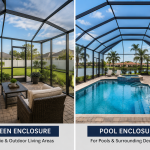
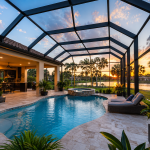
If you have started collecting quotes for a new pool cage or pool enclosure, you have probably noticed something frustrating. Every contractor seems to promise quality work. Every proposal sounds good. Every company claims years of experience. Yet the prices can be thousands of dollars apart.
For many homeowners across Orlando, Clermont, Winter Garden, Kissimmee, The Villages, and other parts of Central Florida, that creates uncertainty. You want a structure that can handle Florida storms, withstand harsh UV rays, pass inspections, and last for years. At the same time, you do not want to overpay for features you may not need.
The challenge is that hiring a pool cage contractor is not like buying a household appliance. You cannot easily compare one quote against another by looking at a single price tag. Engineering standards, permit requirements, aluminum specifications, installation methods, warranty coverage, and crew experience all play a role in the long-term performance of your enclosure.
Over the years, many homeowners have called after discovering problems that could have been avoided with better questions upfront. Some inherited issues from a previous owner. Others hired a contractor based solely on the lowest bid. In both situations, the result was often the same: unexpected repairs, permit complications, or structural concerns that became expensive later. Before signing a contract, you should know exactly what to ask and what answers deserve a closer look.
Quick Takeaways
|
Why Choosing the Wrong Pool Cage Contractor Can Become Expensive
The wrong pool cage contractor can cost far more than the original contract price. Most problems do not show up on installation day. They appear months or years later after the structure has been exposed to Florida weather. A pool screen begins sagging. Fasteners start corroding. Roof panels loosen during a storm. An inspection issue surfaces when you try to sell the house.
Central Florida may not face the same coastal salt exposure as Cape Coral, Fort Myers, or Bonita Springs, but local structures still endure intense heat, heavy rain, strong wind events, and year-round sun exposure. Every pool enclosure must be designed with those conditions in mind.
The difficulty for homeowners is that many issues remain hidden during the sales process. Two companies can present similar-looking renderings and nearly identical proposals. One structure may perform well for decades. The other may require major repairs much sooner. That is why asking the right questions matters. More importantly, you should pay attention to how the contractor answers them.
Question #1: Are You Licensed and Insured in Florida?
Yes, every legitimate pool cage contractor should be able to quickly provide proof of licensing and insurance. This sounds obvious, but the details matter.
A contractor should be able to explain their licensing status, provide documentation, and discuss their coverage without hesitation. You should also verify that they carry proper insurance for the work being performed.
Ask specifically about:
Business licensing
General liability coverage
Workers compensation coverage
Whether subcontractors are also covered
The answer itself is important. The confidence behind the answer is equally important. A fully licensed contractor usually provides information immediately. If you receive vague responses or repeated assurances without documentation, consider that a warning sign. You are not simply hiring workers. You are allowing a construction company to perform structural work on your property.
Question #2: Will You Pull the Required Permits?
A qualified pool cage contractor should clearly explain permit requirements before work begins. One thing that catches many homeowners off guard is that not every pool cage project follows the same permitting requirements. A complete replacement, structural modification, or new pool cage often requires permitting and inspections. Some contractors may attempt to downplay this step.
Pay close attention if you hear phrases such as:
Permits only slow things down
We usually skip that part.
The homeowner can handle it.
Those answers should raise questions. Permit approval protects both the homeowner and the contractor. It confirms that the proposed construction meets current code requirements and applicable wind-load standards.
A professional contractor should be comfortable discussing permit timelines, inspections, and engineering requirements without trying to avoid the conversation. If you are unsure what applies to your project, review the state’s requirements regarding permit requirements for pool cages in Florida.
Question #3: What Wind Load Standards Will My Structure Be Built To?
Your pool enclosure should be designed for your specific location, not a generic standard. Florida is not one-size-fits-all. A structure built for one area may require different engineering than a similar enclosure installed elsewhere. Wind exposure, local codes, lot placement, and municipal requirements can all influence design specifications.
Ask the contractor:
What wind speed applies to my property?
Will engineered drawings be included?
Will the enclosure be reviewed by an engineer?
How does my location affect the design?
An experienced enclosure contractor should answer comfortably and explain the reasoning behind the recommendation. If the conversation immediately shifts back to price, continue asking questions. Structural performance should never be an afterthought.
Question #4: What Type of Aluminum Will Be Used?
The strength of a pool cage depends heavily on the materials used to build it. Most homeowners understandably focus on the visible parts of a project. Screens, doors, and roof panels tend to get the most attention. The frame itself often receives less scrutiny. Yet the frame is what carries the structural load.
Ask the contractor:
What gauge of aluminum is included?
Are stronger options available?
Why was this specification selected?
A quality contractor should explain how material choices affect durability, performance, and long-term value. For a deeper comparison, review these common aluminum specifications for pool enclosures.
A lower price sometimes reflects lighter materials. Sometimes it does not. The only way to know is to ask. The best contractors welcome those conversations because they understand that an informed homeowner is often a more confident customer.
Question #5: What Type of Screen Will Be Installed?
The best screen for your project depends on how you use your outdoor space. Many homeowners assume all screen materials are the same. They are not. Different screen options are designed for different priorities. Some maximize airflow. Others improve insect protection. Some offer added durability in homes with pets or active families.
Ask the contractor:
What screen material is included in the quote?
How long does it typically last?
Are there upgraded options available?
How does it affect visibility and airflow?
A knowledgeable screen enclosure company should explain the tradeoffs rather than automatically pushing the most expensive option. For example, a homeowner near a retention pond in Clermont may prioritize insect control. A homeowner in Winter Garden may be more concerned with visibility around the pool area. Someone replacing an old screen may simply want better durability than what was installed originally.
There is rarely a universal best choice. The right answer depends on your property, lifestyle, and goals.
Question #6: Have You Worked on Homes in My Area Before?
Local experience matters more than many homeowners realize. A contractor who regularly works in Central Florida understands local permitting departments, HOA requirements, weather patterns, and inspection expectations. That familiarity often helps projects move more smoothly.
Ask questions such as:
Have you completed projects in my city?
Can I see examples nearby?
Are there neighborhoods similar to mine where you have worked?
An experienced pool cage contractor should have no trouble discussing previous projects in places such as Orlando, Oviedo, Winter Springs, Apopka, Lake Nona, or Davenport. The answer itself is important. How they answer is often even more revealing.
A contractor with genuine local experience usually remembers details about specific projects. They can discuss challenges, site conditions, permit processes, or unique design considerations. Those details are difficult to fake.
Question #7: What Warranties Do You Offer?
Every warranty sounds great until you discover what is excluded. You should never assume warranty coverage means complete protection.
Ask the contractor to explain:
What is covered?
What is excluded?
How long does coverage last?
Does coverage apply to labor, materials, or both?
How are warranty claims handled?
Pay attention to whether the contractor explains the limitations clearly. Many homeowners focus entirely on the length of the warranty. In reality, clarity is often more important.
A five-year workmanship warranty from a stable local company may provide more practical value than a longer warranty from a company with limited local presence. You are not only evaluating a piece of paper. You are evaluating whether the company will still be available if you need help years later.
Question #8: What Is Included in the Written Estimate?
A professional estimate should remove confusion, not create it. Problems often arise when important project details are never clearly discussed or documented. The homeowner assumes something is included. The contractor assumes it is not. Later, the disagreement becomes a change order.
Before signing anything, make sure the estimate clearly identifies:
Materials
Engineering
Permits
Labor
Cleanup
Inspection requirements
Timeline expectations
Payment schedule
The more detailed the proposal, the easier it becomes to compare companies fairly. Be cautious if major portions of the project remain vague. A lower quote is not necessarily a better quote if important components have been omitted. Many homeowners discover this only after construction begins.
Question #9: What Is the Expected Timeline From Permit Approval to Completion?
A realistic schedule is usually a good sign. A promise that sounds too good to be true often deserves a closer look. Florida projects involve variables that contractors cannot fully control. Permit review times vary. The weather can create delays. Material availability can fluctuate. Inspection schedules sometimes change.
An experienced pool cage contractor should be transparent about those realities.
Ask:
What is the typical timeline?
What factors could cause delays?
How will communication be handled during the project?
The goal is not finding the fastest answer. The goal is to find the most realistic answer. Homeowners generally have a better experience when expectations are set properly from the beginning.
Pay Attention to How the Contractor Answers, Not Just What They Answer
Most contractors know the answers homeowners expect to hear. The difference often appears in the details. Over the years, many homeowners have shared stories about contractors who technically answered every question correctly. Looking back, there were subtle clues that something felt off. Those clues are worth paying attention to.
Do They Give Specific Answers or General Reassurance?
Specific answers often signal experience. General reassurance often avoids the real question. If you ask about aluminum specifications and hear a detailed explanation, that is encouraging. If the answer is simply don’t worry about it, ask another question. Professionals typically enjoy discussing their work.
Do They Ask Questions About Your Property?
A good contractor investigates before recommending solutions. They may ask:
How old is the existing enclosure?
Has it suffered storm damage?
Is the property exposed to open wind?
Are there HOA restrictions?
What are your long-term goals?
Those questions help create a better recommendation. A contractor who immediately jumps to pricing may be focusing more on selling than evaluating.
Do They Explain Tradeoffs?
Every project involves decisions. A trustworthy contractor explains both benefits and limitations. For example, one screen option may improve insect protection while slightly reducing airflow. A heavier structural design may increase durability while also increasing cost. Good recommendations usually include context.
Do They Discuss Potential Challenges?
No project is completely free of challenges. Experienced contractors know that. If a contractor openly discusses permit timelines, inspection requirements, weather delays, and site conditions, it often reflects practical experience. Perfect promises deserve scrutiny.
Small Phrases That Should Make You Ask Follow-Up Questions
Some statements are not immediate deal breakers. They should, however, encourage further discussion.
Phrase | Why It Deserves Another Question |
We have always done it this way | Codes and standards evolve. |
Permits just slow things down | Compliance should never be dismissed casually. |
Engineering is usually not necessary | Requirements vary by project and location. |
We will figure that out later | Scope gaps often become unexpected costs. |
Nobody else asks about that | A question deserves an answer, not avoidance. |
The warranty covers everything | Ask specifically what is excluded. |
Sometimes the smallest details reveal the most.
Question #10: Do You Recommend Repair, Rescreening, or Full Replacement?
A trustworthy contractor should explain all reasonable options. Not every project requires a complete replacement. In some situations, replacing a damaged pool screen may be sufficient. In others, structural deterioration makes replacement the smarter long-term investment. Understanding the differences between pool cage replacement and rescreening can help you determine which option provides the best value.
Ask the contractor to explain:
What condition is the frame in?
What condition is the screen in?
What repairs are possible?
How long is each option expected to last?
The best contractors educate first and sell second. If every conversation somehow leads directly to the most expensive solution, continue asking questions. Many homeowners appreciate honest guidance, even when it results in a smaller project. That trust often leads to long-term customer relationships.
Red Flags That Should Make You Walk Away
Some warning signs are obvious. Others are easier to overlook because they do not feel like major problems at the time. If you encounter one of these issues, slow down before signing a contract.
Be cautious if a contractor:
Avoids discussing permits.
Cannot provide proof of being licensed and insured.
Changes pricing repeatedly without explanation.
Pushes for immediate signatures.
Refuses to provide references.
Gives lower pricing than every competitor dramatically.
Cannot clearly explain material specifications.
Avoids putting details in writing.
Many homeowners who experience project issues later can often trace the problem back to one of these early warning signs. The goal is not to find the cheapest company. The goal is to find the most qualified company for your specific project.
Contractor Comparison Checklist for Florida Homeowners
When comparing proposals, use a simple scorecard. A structured comparison often reveals differences that are easy to miss when focusing only on price.
Question | Contractor A | Contractor B | Contractor C |
Provided proof of license and insurance? | ☐ | ☐ | ☐ |
Explained permit requirements clearly? | ☐ | ☐ | ☐ |
Discussed wind-load engineering? | ☐ | ☐ | ☐ |
Explained aluminum specifications? | ☐ | ☐ | ☐ |
Offered multiple screen options? | ☐ | ☐ | ☐ |
Provided local references? | ☐ | ☐ | ☐ |
Clearly explained warranty coverage? | ☐ | ☐ | ☐ |
Gave a detailed written estimate? | ☐ | ☐ | ☐ |
Explained potential project delays? | ☐ | ☐ | ☐ |
Answered questions without pressure? | ☐ | ☐ | ☐ |
If one company consistently provides better answers across multiple categories, the decision often becomes much clearer.
Questions Most Homeowners Forget to Ask
Some of the most important questions are rarely discussed during the sales process.
Who Will Actually Perform the Installation?
The person giving the estimate may not be the person building the structure. Ask who will handle the day-to-day work and who will supervise the project. Knowing this helps set expectations for communication and accountability.
Will the Same Crew Handle the Entire Project?
Crew consistency matters. Multiple handoffs can sometimes create confusion regarding measurements, materials, and project expectations. A stable installation team often contributes to smoother execution.
What Happens If Additional Structural Issues Are Discovered?
This question becomes especially important during replacement projects. Occasionally, hidden issues become visible once an older enclosure is removed. Ask how those discoveries would be documented and communicated before additional work begins.
How Are Change Orders Handled?
Changes happen. The important part is understanding how they are approved.
You should know:
How changes are documented.
When pricing is communicated.
Whether written approval is required.
Clear processes help prevent misunderstandings.
Can I See a Recently Completed Project?
Photos are helpful. A recently completed local project is often more valuable. Seeing real work in a nearby community provides insight into mastery of the work, attention to detail, and overall project quality.
Choosing the Right Contractor Often Comes Down to Trust
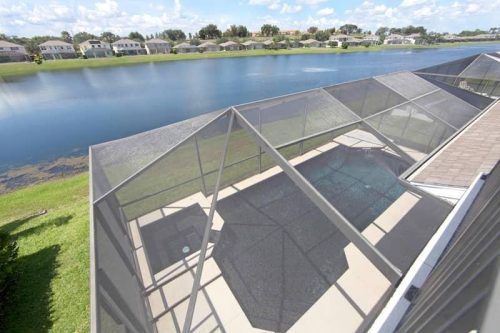
Hiring a pool cage contractor is ultimately about more than comparing prices. You are trusting a company to build a permanent structure that affects your home’s appearance, durability, functionality, and long-term value. A properly designed pool enclosure helps protect your pool area from debris, improves comfort around the pool, enhances curb appeal, and contributes to more enjoyable outdoor living spaces throughout the year.
The contractors worth hiring are usually the ones who educate rather than pressure. They explain engineering requirements. They discuss material options. They answer questions directly. They acknowledge tradeoffs. Most importantly, they help you make an informed decision based on your property rather than forcing a one-size-fits-all solution.
At Creative Pool Cages, those conversations happen every day with homeowners throughout Orlando, Winter Garden, Clermont, Davenport, Kissimmee, The Villages, and surrounding Central Florida communities. Whether you are considering a new pool cage, replacing an aging structure, upgrading a lanai cage, or exploring options for a custom enclosure, the goal remains the same: provide clear information, realistic recommendations, and professional guidance from the initial design through final installation.
If you are planning a project and want a second opinion before making a decision, contact the Creative Pool Cages team for a free estimate and a detailed evaluation of your property. A few questions today can help you avoid costly surprises tomorrow.