In Florida, sharing your backyard with nature isn’t optional. Whether you live near retention ponds in North Port, a canal home in Port Charlotte, or a preserve lot across Southwest Florida, wildlife is part of your daily life.
You might be considering a pool cage specifically to keep alligators, snakes, and other wildlife away from your pool area. And while these structures add an incredible layer of protection, they aren’t a magic force field. A properly installed screen enclosure creates a strong physical barrier that improves safety, reduces debris, and enhances your outdoor living space year-round. But not all enclosures are created equal. Understanding what your pool cage is designed to do, and where it has limits helps you protect your family, pets, and property with confidence.
What a Standard Florida Pool Cages System Is Designed to Do
They also make your life easier by keeping dirt and bugs out, meaning you spend less time on pool maintenance during the swimming season. If you live in Southwest Florida, some systems even help you retain heat during the cooler months.
Feature | Purpose | Estimated Cost Range (Florida) |
Standard aluminum frame | Structural support, strong winds resistance | $8,000–$15,000 |
Standard screen mesh | Insect & debris control | Included |
Upgraded pet-resistant screen | Added durability and claw resistance | +$1,500–$3,000 |
Kickplate (bottom reinforcement) | Bottom reinforcement for wildlife resistance | +$1,000–$2,500 |
Full rescreen service | Replace worn screen to remove weak points | $2,000–$7,000 |
While a standard enclosure is great for visual appeal, you’ll want to consider specific upgrades if wildlife-proof protection is your main goal.
Can Alligators Get Through a Pool Cage?
It’s the question you’ll eventually ask yourself, especially if your Florida home backs up to a lake in Punta Gorda or a retention pond in North Port.
The short answer? A healthy, properly maintained pool cage makes it extremely difficult for an alligator to reach your pool area. But it’s important to know how they test your defenses. Wildlife rarely tries to bust through the middle of a screen. They look for weak points.
Through the Screen?
Alligators can’t simply push through intact screen mesh. Standard lanai screens are woven tightly to block insects and debris. However, if your screens are older, have torn panels, or the spline is loose, you’ve left a door open. If strong winds have stretched your materials or corrosion has weakened your fasteners, common in Southwest Florida coastal zones, that vulnerability increases.
Under the Frame?
This is your real risk. If soil erosion creates a gap beneath your enclosure or if your slab shifts, an opening can form. Large wildlife will exploit any space they can fit their snout into.
Regular inspection and maintenance of your pool enclosures ensures your structural integrity stays strong. When you use high-quality materials and ensure a proper seal at the base, these systems provide meaningful protection.
Can Snakes Get Inside a Screen Enclosure?
Snakes are the ultimate gap-finders. The small black racers and rat snakes common across Florida can slip through spaces you might not even notice. While your screen enclosure mesh blocks insects and no-see-ums, it can’t block a gap beneath your frame.
If you have a gap even half an inch wide at the bottom, snakes may enter your outdoor space looking for shade. That’s why it is recommended that you keep landscaping and pool equipment away from the perimeter. Don’t give them a place to hide.
To stop them, some homeowners in Port Charlotte and North Port choose to install a kickplate or seal slab gaps. These upgrades drastically reduce the chances of a snake crashing your swimming season.
What Wildlife Pool Cages DO Keep Out
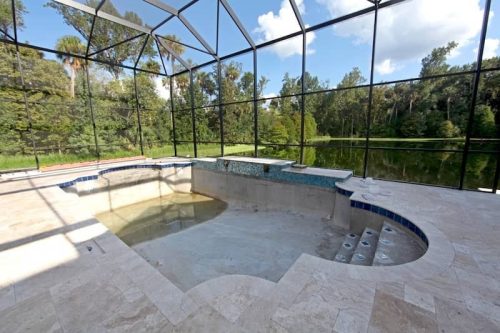
Where your pool enclosure truly earns its keep is in environmental control. They are legendary at blocking mosquitoes, biting insects, no-see-ums, and flying debris.
They also act as a major deterrent for raccoons, opossums, iguanas, and other small animals that want to lounge in your backyard pools area. By keeping birds away from your pool water, you reduce contamination and save yourself a headache with pool maintenance. For most Florida homeowners, this is the “peace of mind” factor that makes the investment worth it.
When a Pool Cage Fails to Keep Wildlife Out
Even the best florida pool enclosures can fail if you ignore maintenance.
Torn Panels: Over time, heat, sun exposure, and strong winds weaken your screen. A tiny tear today is a wildlife entry point tomorrow.
Corrosion: In coastal Southwest Florida (like Punta Gorda), salt air eats fasteners. If your base rail lifts even slightly, you’ve lost your seal.
Installation Quality: Not all enclosures are created equal. Lower-grade materials or a budget installation will compromise your long-term protection.
Routine inspection protects your outdoor area and extends the life of your investment. Addressing small issues early prevents larger wildlife access problems later.
How to Make a Pool Cage More Wildlife-Resistant
You can transform your pool cage system from basic protection into a serious barrier with a few targeted upgrades:
Kickplate Installation: This aluminum panel blocks a snake’s view and physically reinforces the base.
Sealing Slab Gaps: Don’t let soil washout create a tunnel under your frame.
Heavy-Duty Screens: Upgrade to a pet-resistant screen or top-quality materials that won’t tear if an animal paws at the mesh.
Routine Maintenance: An annual professional inspection catches corrosion and weak points before a critter does.
These targeted improvements enhance protection without sacrificing the open feel and seamless blend that make your outdoor living in Florida enjoyable.
Do You Need a Pool Cage Repair or Upgrade?
If your enclosure is more than ten years old, you should have it evaluated. Signs you need service include visible screen tears, loose fasteners, bottom gaps, or sections that rattle when the wind picks up.
If you’ve noticed more insects, debris, or signs of wildlife near your pool, don’t wait. Strengthening your enclosure adds a vital layer of safety for your pets and family. Whether you need a full rescreen or just want to reinforce your base, proactive maintenance keeps your outdoor living space functional year-round.
Are Pool Cages Wildlife-Proof?
The honest answer is no. Nothing in Florida is 100% wildlife-proof. They are designed to control your environment and enhance your lifestyle.